



26 January is not just a national celebration; it represents India’s democratic vision and long-term development journey. Just as the Constitution provides a strong framework for the nation, the Indian real estate sector has laid a solid foundation for the country’s economic and urban growth.
As India moves steadily towards the vision of Viksit Bharat 2047, the real estate sector has emerged as a silent yet powerful pillar of nation-building, shaping cities, creating employment, and enabling inclusive development.
Real Estate: From Shelter Provider to Growth Engine
After independence, the role of Indian real estate was largely limited to meeting housing demand. Over the decades, the sector has evolved into a key growth engine of the Indian economy. Today, Indian real estate:
• Is the second-largest employment generator after agriculture
• Supports allied industries such as infrastructure, finance, manufacturing, and technology
• Acts as the backbone of urbanisation and economic expansion
By 2030, the Indian real estate market is expected to reach a trillion-dollar valuation, contributing significantly to India’s position among the world’s leading economies.
Post-Independence Reforms That Shaped Modern India
Following independence, the Government of India introduced several landmark reforms to regulate and develop the real estate sector. Key initiatives included planned urban development and capital city master plans during the 1950s and 1960s, structured city models such as the Delhi Development Plan and Chandigarh, the Maharashtra Regional and Town Planning Act, 1966, and government housing initiatives for employees and low-income groups. These reforms laid the foundation for an organised and regulated real estate ecosystem in India.
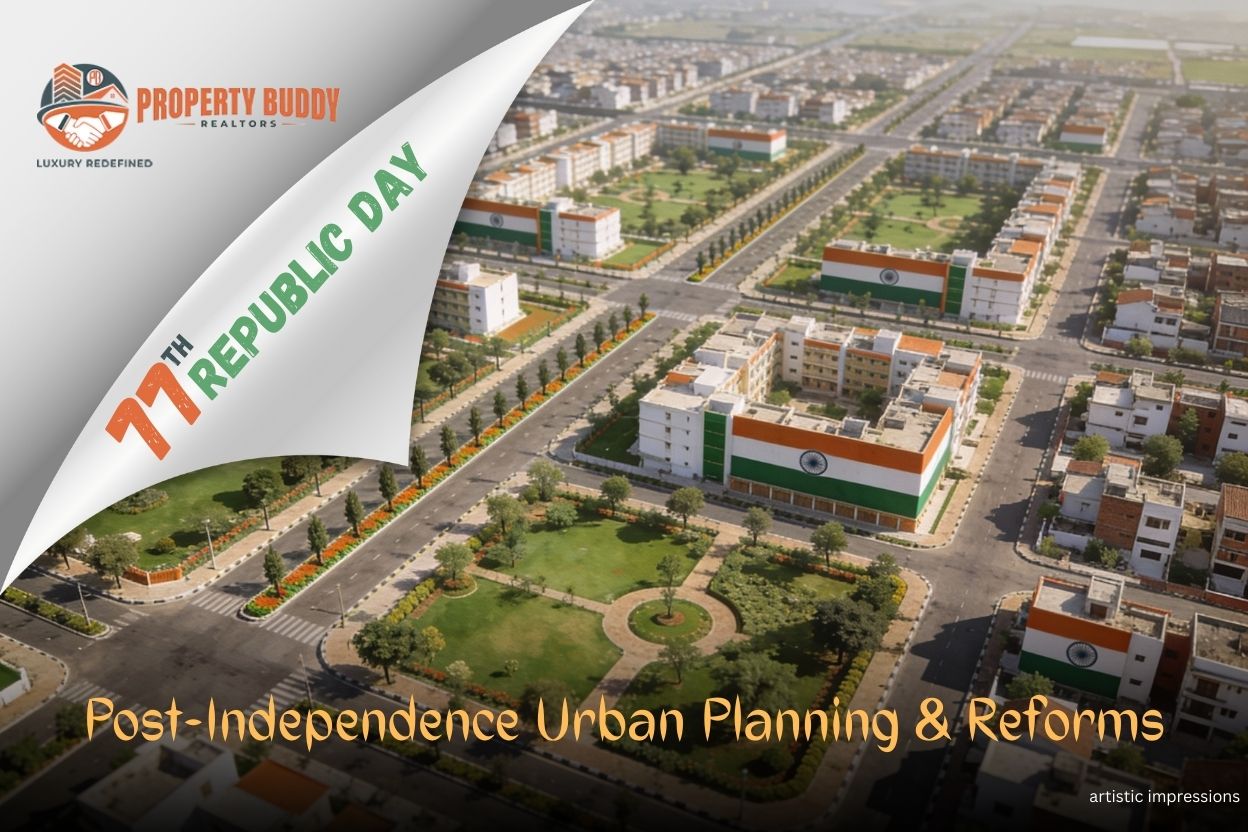
Over time, these policy frameworks enabled greater participation from the private sector, particularly in emerging urban regions such as Delhi NCR. Planned cities like Noida and Greater Noida benefited from structured layouts, modern infrastructure, and zoning regulations, creating the ideal environment for private developers to deliver large-scale projects.
Since the 1980s, leading developers like Godrej Properties, Nirala world, Experion Developers, Gaur Group, and Rise resort residences Infraventures have transformed the residential landscape of these areas. Their projects introduced gated communities, high-rise apartments, integrated townships, and lifestyle-oriented amenities including green spaces and clubhouses.
Infrastructure developments such as the Noida–Greater Noida Expressway, Yamuna Expressway, metro connectivity, and the Jewar International Airport have further accelerated growth. Today, Noida and Greater Noida have evolved into thriving residential and investment destinations, making them prime choices for property buyers in Noida, real estate investors in Greater Noida, and those seeking modern urban housing in Delhi NCR. The combination of structured government planning and efficient private sector execution has transformed Delhi NCR into one of India’s most organised, future-ready real estate markets.
Affordable Housing: A Constitutional Responsibility
The spirit of Republic Day reflects values of equality and dignity, and the concept of housing for all is a direct extension of these principles. Since independence, affordable housing has remained a key focus area.

Major milestones include:
• National Housing Board (1950)
• 74th Constitutional Amendment (1992)
• National Housing and Habitat Policy (1998)
• Jawaharlal Nehru National Urban Renewal Mission (2005)
These initiatives aimed to provide affordable homes to the urban poor, promote planned cities, and strengthen sustainable infrastructure.
Pradhan Mantri Awas Yojana: One Home, One Dignity
Launched in 2015, the Pradhan Mantri Awas Yojana (PMAY) transformed India’s housing landscape. The scheme focuses on providing pucca homes across urban and rural India, with special emphasis on:
• Priority to female ownership
• Benefits for EWS, LIG, and MIG segments
• Affordable home loans through the Credit Linked Subsidy Scheme (CLSS)
PMAY is not just a housing initiative but a symbol of social security, inclusion, and empowerment.
Smart Cities and Urban Transformation in India
Under the Smart Cities Mission launched in 2015, the Government envisioned transforming 100 cities into future-ready urban centres. The focus areas include:
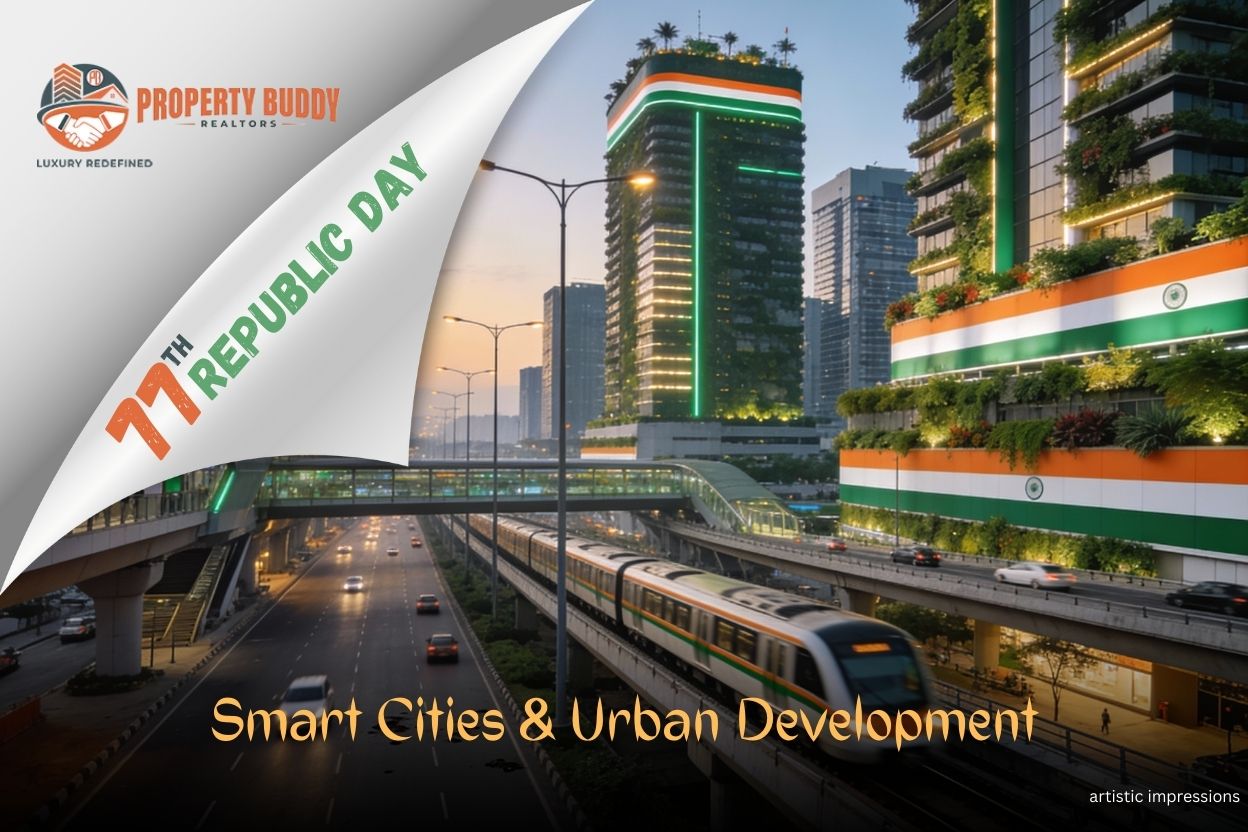 Sustainable and resilient infrastructure
• Green and eco-friendly development
• Technology-driven governance
• Improved quality of urban life
Today, Smart Cities have become major investment destinations within the Indian real estate sector.
Transparency and Trust: New-Age Real Estate Reforms
Accountability is a core value of Republic Day, and recent real estate reforms reflect this principle clearly.

• RERA (2016): Enforced project timelines, protected homebuyers, and improved transparency
• Benami Property Act (Amended 2016): Curbed black money and ensured legal ownership clarity
• GST: Introduced a unified taxation structure and formalised the real estate ecosystem
Together, these reforms have strengthened trust and professionalism in Indian real estate.
Global Confidence and Investment Growth
The liberalisation of Foreign Direct Investment (FDI) in 2005 opened Indian real estate to global investors. Additionally, Real Estate Investment Trusts (REITs) enabled retail investors to participate in commercial real estate.
With continuous infrastructure development and regulatory stability, India has secured a strong position on the global real estate map.
Technology: The New Republic of Real Estate
Modern Indian real estate is no longer limited to brick-and-mortar development. Digital transformation has introduced:
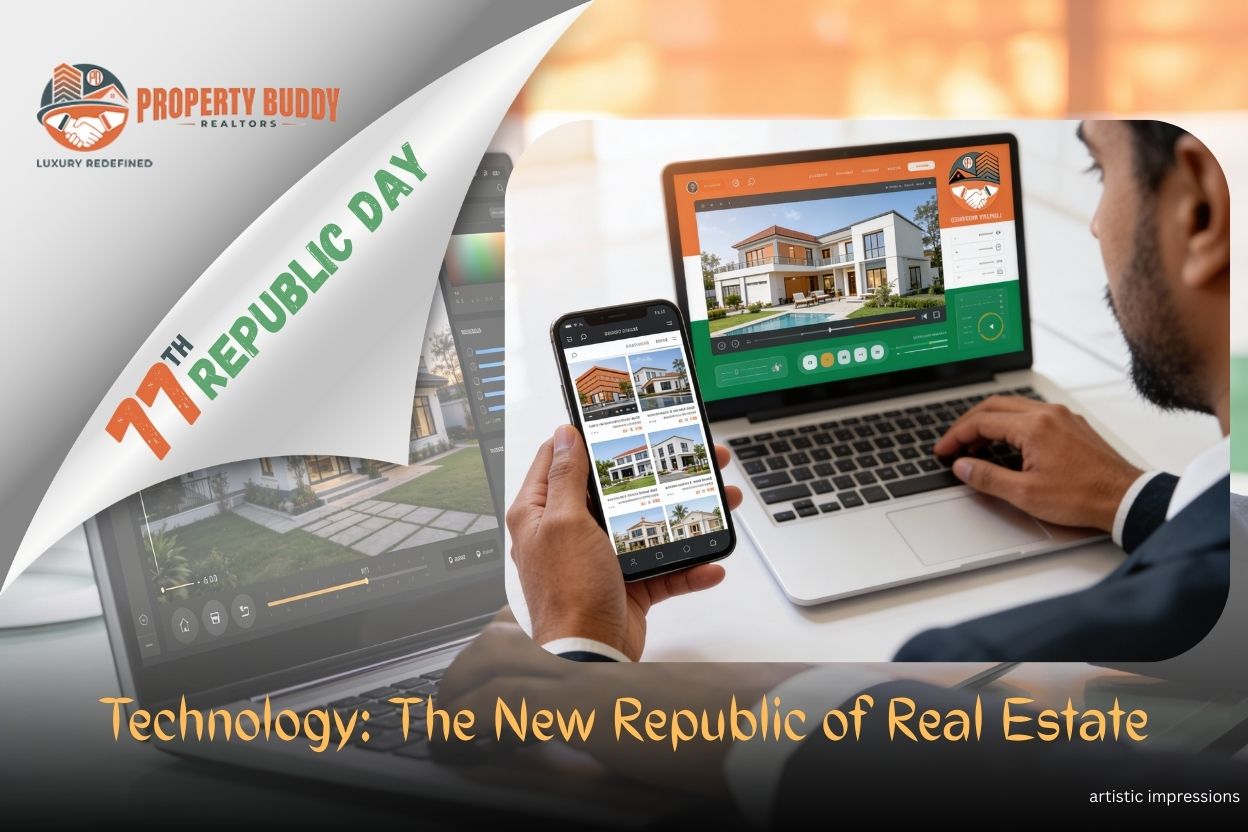
• Online property search platforms
• Virtual property tours
• Digital documentation
• Online property tax payments
Technology has made real estate transactions faster, more transparent, and buyer-friendly.
Sustainable and Green Housing: The Future of India
Viksit Bharat is not just about growth but responsible growth. Sustainable real estate practices now include:
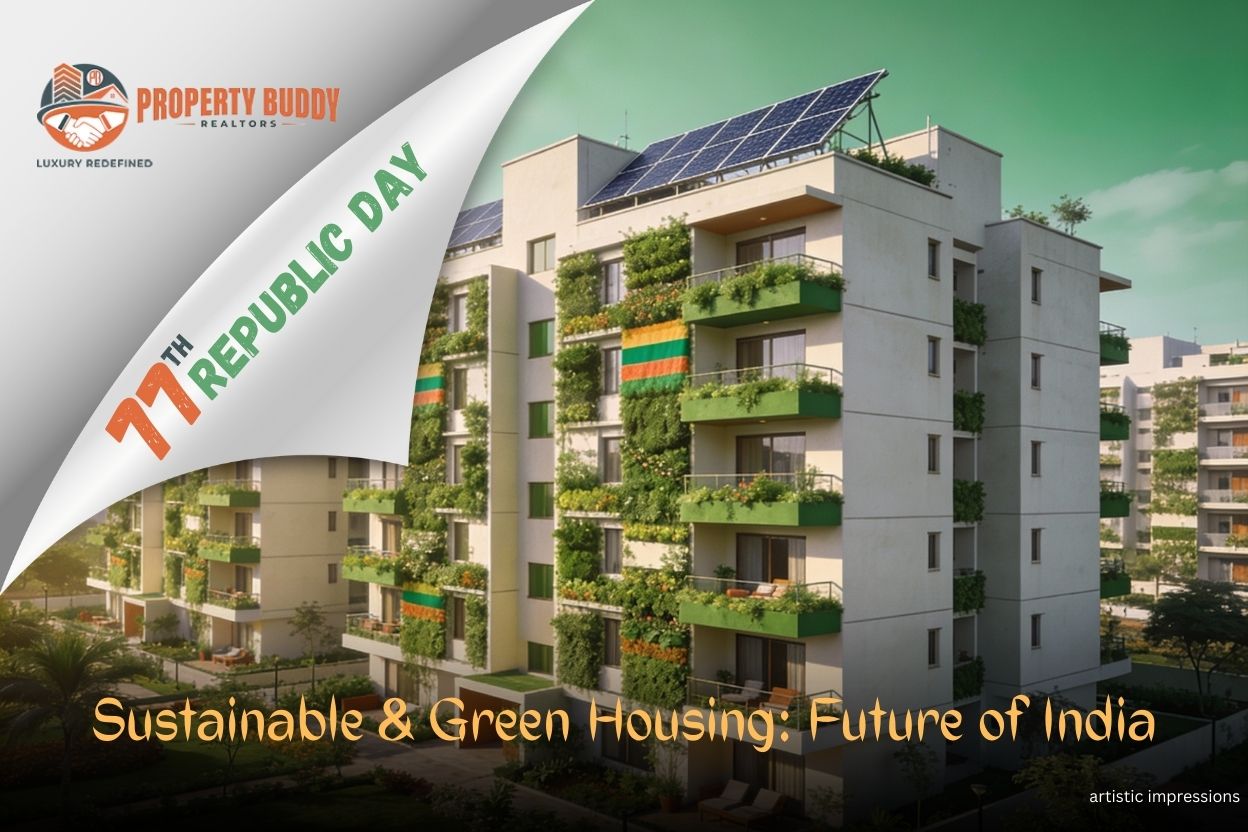
• Solar energy systems
• Rainwater harvesting
• Waste management solutions
• Green-certified buildings
Green housing is no longer a luxury—it has become a necessity for India’s future.
Conclusion: Building India, Brick by Brick
This Republic Day, as India celebrates its Constitution and democratic values, it is important to recognise the role of Indian real estate in giving physical shape to the nation’s aspirations.



Leave a Reply